
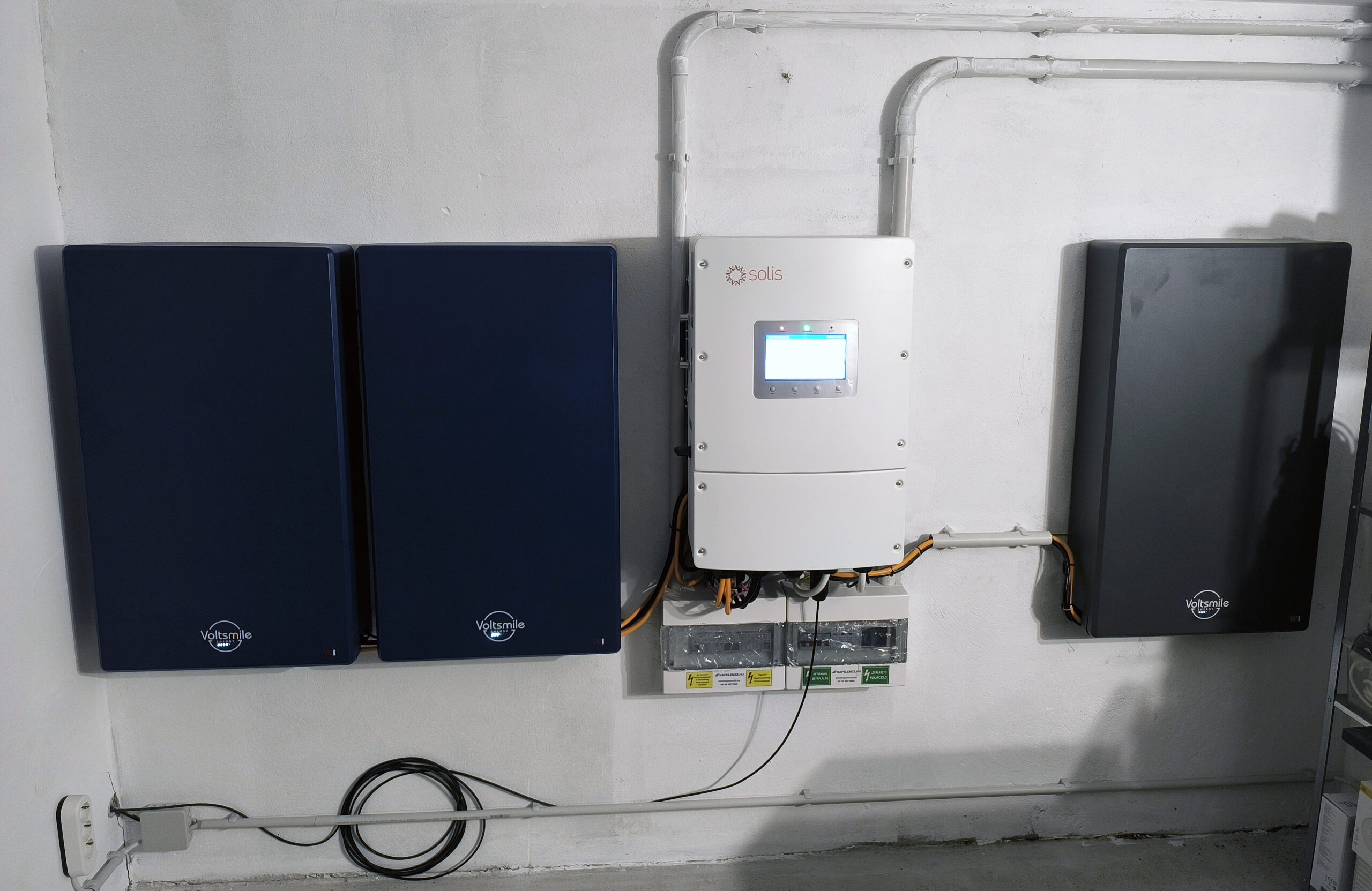
During one of our recent installation projects in Hungary (Pest County area), our client decided to expand their existing system based on real-world operational data. In this article, we showcase how a solar battery storage expansion from 10 kWh to 30 kWh was carried out and present the concrete performance results after one year of operation.
When planning a solar battery storage expansion, one of the most common questions is choosing the right battery capacity. While consumption profiles can be estimated in advance, the most accurate answers are provided by the first year of actual operating data.
We commissioned a hybrid solar system equipped with a 10 kWh battery storage unit for our client nearly a year ago. After analyzing the system statistics and consumption habits of the past period, a clear conclusion emerged: adding an extra 20 kWh of storage capacity was the optimal step to make better use of locally generated surplus energy.
Why Was the Solar Battery Storage Expansion Necessary?
The 10 kWh battery performed exceptionally well in smoothing out daily peak demand and covering early evening hours. However, during the high-production summer periods, the storage filled up quickly, sending surplus energy back to the grid. Meanwhile, during late night or early morning hours—especially with high-energy appliances like AC units or heat pumps running—grid import was still occasionally required.
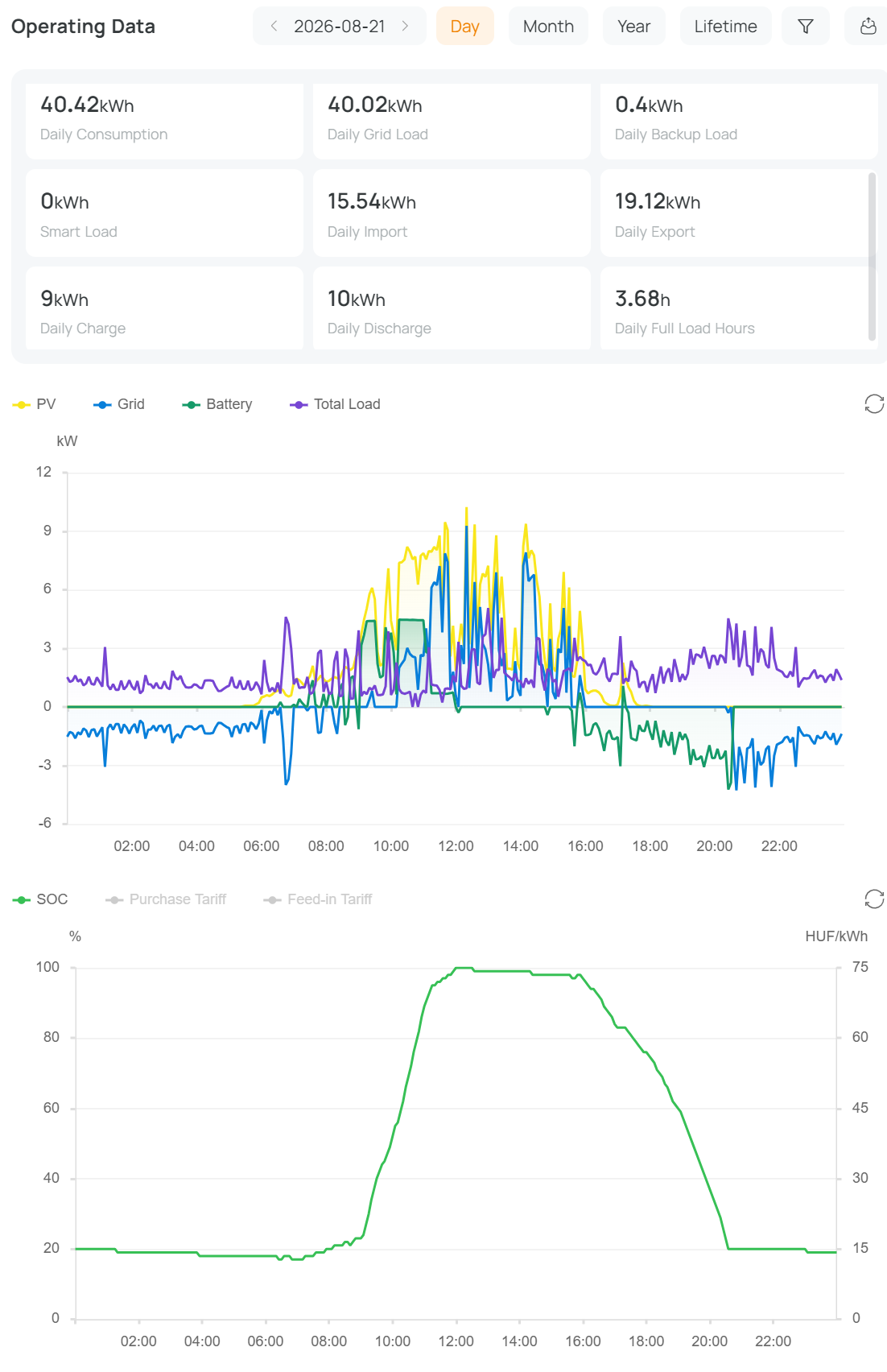
With the 10 kWh battery, 15.54 kWh of grid import was still needed in summer, while 19.12 kWh of surplus energy was exported to the grid.
According to the measurement data, the 10 kWh storage setup still required 15.54 kWh of grid import on a single peak summer day, while 19.12 kWh of excess energy was exported.
Upgrading to a 30 kWh total capacity elevated the system’s performance to a whole new level.
Real-World Results of the Battery Storage Upgrade
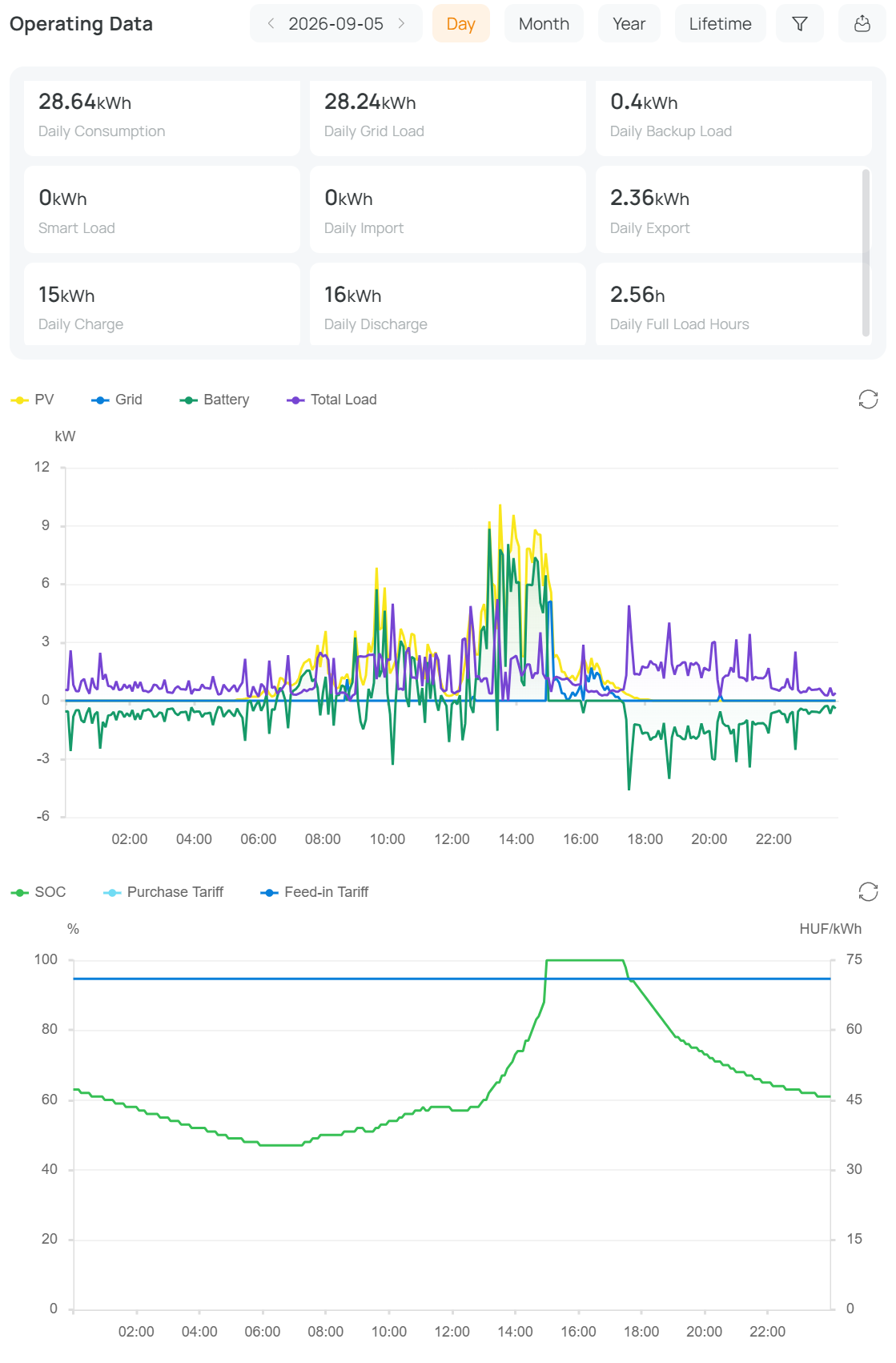
After the 30 kWh expansion, daily grid import dropped to 0 kWh, with 98% of generated solar energy consumed locally.
Following the 30 kWh upgrade, daily grid import dropped to practically 0 kWh. Grid export was reduced to just 2.36 kWh, meaning 98% of the generated energy is now utilized locally.
Summer Grid Independence: Thanks to the increased battery capacity, the property completely eliminated grid power consumption during summer months.
100% Local Consumption: Day-time surplus energy is stored in the batteries, fully covering the household’s power demand through the night and during consecutive cloudy days.
Virtual Off-Grid Operation: The system capacity now enables the house to operate completely independently from the main grid during the summer.
Why Choose a Scalable Energy Storage Architecture?
This case study demonstrates that energy storage is not a rigid, one-time decision. Modern hybrid inverters and modular battery technologies allow for flexible capacity expansion.
Systems can easily be adapted as energy habits evolve, making a modular solar battery storage expansion a future-proof investment.
Planning to Expand Your Existing Solar System?
Looking to maximize your solar energy utilization and minimize grid dependency? The Smart Deployment team provides end-to-end engineering and installation services across Hungary.
Contact our expert team on our Contact page to analyze your consumption data together, or visit our Napelem22 platform for residential solutions!